
Window Cleaning
Window cleaning usually lives in two markets at once, homes on a route and buildings on a contract, and the marketing for each pulls in a different direction.
Two buyers, one crew
Most window cleaning companies are not purely residential or purely commercial. The marketing has to respect that without turning into two disconnected campaigns.
- Route density decides profitability
- Clustered work is profitable work. A lead twenty minutes outside the route can cost more than it earns.
- The service is recurring by nature
- Glass gets dirty again on a predictable cadence, which makes retention and rebooking as much a marketing job as acquisition.
- Access and trust matter
- Interior glass means entering the home. Height means equipment and insurance. Both are buying questions, and both belong in the message.
- The commercial side behaves like janitorial
- Storefronts, offices and property managers buy on schedule, reliability and price per visit, a different conversation than a homeowner's.
What we hear from window cleaning owners
Leads scatter across the map and wreck the route.
Homeowner inquiries and commercial inquiries get handled with the same script.
Customers book once and are never brought back on cadence.
Existing customers do not know the company also does the other exterior services.
Inquiry volume swings through the year with no plan for the slow stretches.
Two paths to the same crew
The residential and commercial paths need different offers, different pages and different follow-up.
- 01
Homeowner notices
Usually seasonal, or prompted by an event, a listing, or simply looking out a dirty window.
- 02
Homeowner shortlists
Search, Maps, neighborhood recommendations. Price and availability decide quickly.
- 03
Homeowner rebooks
The next clean is won during the first one. Cadence is where the revenue is.
- 04
Commercial contact
A storefront, office or property manager needs a schedule, not a single clean.
- 05
Commercial quote
Frequency, access, insurance and price per visit get resolved in a short, practical conversation.
- 06
Commercial retention
Reliability keeps the account, and one property manager often controls several buildings.
How the five doors show up in window cleaning
The same five doors, diagnosed against this business model. Not every industry fails in the same place.
- Door 01
Platform
Homeowner demand is largely search and Maps. Commercial and route-expansion demand often has to be created, which is a different channel decision.
- Door 02
Creative & Art
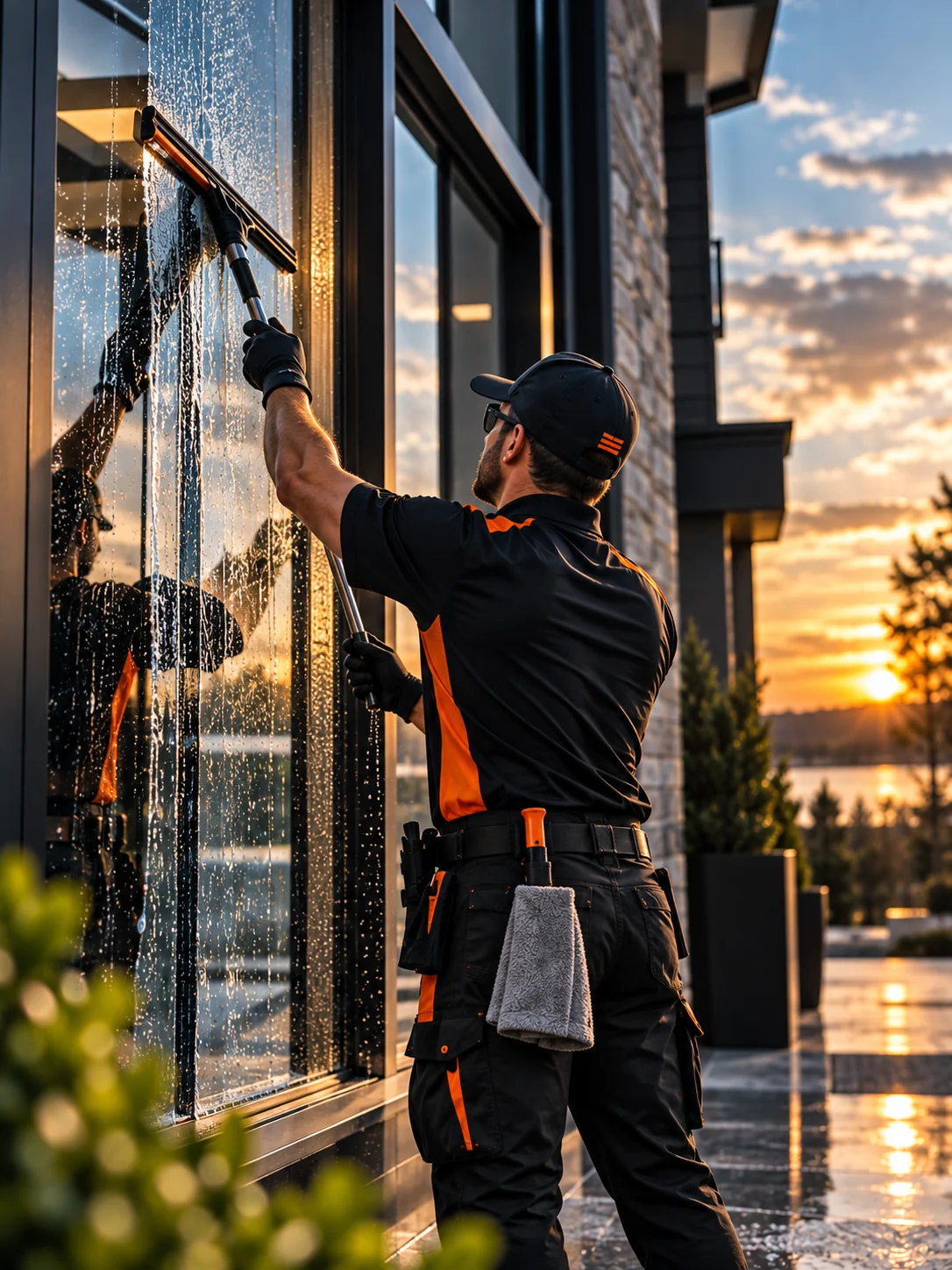
Clean glass photographs poorly and before-and-after carries the message. The creative task is making an invisible result visible.
- Door 03
Targeting
Geography is the whole game. Targeting around existing route density usually beats targeting the widest reachable area.
- Door 04
Ad Engagement
Homeowners want a quick number; commercial contacts want a schedule conversation. One generic form serves neither well.
- Door 05
Sales
Rebooking and cadence are sales work, not marketing work, and they are where a lot of window cleaning growth is actually stuck.
What we may deploy, once we know what is broken
No cleaning company needs all six. These are the capabilities that most often matter in this industry.
- Google Ads ManagementCaptures homeowners searching in the specific areas where your route already runs.
- SEO Management & AI VisibilityLocal search and Maps visibility produce steady residential inquiries between campaigns.
- Organic Social Media Content CreationShows the crew, the access equipment and the finished work to a neighborhood that has not called yet.
- Website Design & DevelopmentSeparates the homeowner path from the commercial path so each buyer gets the right next step.
Know the lead target before you spend on window cleaning marketing.
Start with the revenue goal, apply your own sales math, and see the number of leads the marketing has to produce. It is a planning aid, it does not predict results.
Window Cleaning Lead Target Planner
Turn a window cleaning revenue goal into a lead target built on your own job values and close rate.
- Business goal
- Sales math
- Lead target
- Marketing plan
You see the work, not just the invoice.
Clients can see which areas are producing inquiries and what we are working on next, useful when route decisions depend on it.
Find out which door is closed.
Tell us where your route is dense and where it is thin. That usually frames the whole conversation.